
We’ve all been there: You’re scrolling through a brilliant deep-dive on social media, you bookmark a life-changing article, and you “save” a YouTube tutorial that promises to teach you a new skill in ten minutes. But let’s be real—those bookmarks are where good ideas go to die. 🪦
In the age of information overload, our biological brains are struggling. We are constantly bombarded with more data than we can possibly process, let alone remember. This is why the concept of a “Second Brain”—a digital system to store and organize your thoughts—has become a survival skill for the modern professional.
But in 2026, the Second Brain has evolved. We aren’t just manually filing notes into folders anymore. We are building AI-Powered Knowledge Ecosystems. 🚀
Imagine a system that doesn’t just store your notes but understands them. A system that can connect a PDF you read three years ago to a project you started this morning. That is the power of an AI Second Brain. Let’s break down how to build yours.
What is a Second Brain? 🧐
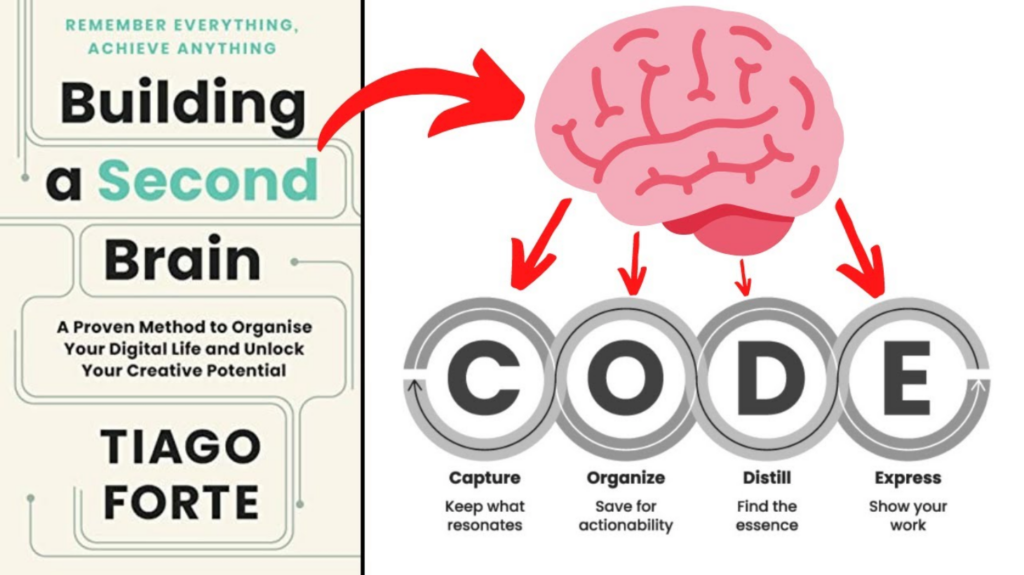
The term “Second Brain” was popularized by productivity expert Tiago Forte. Traditionally, it involved a methodology called CODE:
- Capture: Collecting what resonates.
- Organize: Saving for actionability.
- Distill: Finding the “essence.”
- Express: Turning knowledge into output.
In 2026, AI has supercharged every single one of these steps. A modern Second Brain is an agentic system. It uses Large Language Models (LLMs) and semantic search to move from a “digital filing cabinet” to a “thinking partner.” It’s no longer about where you put the information; it’s about how the AI surfaces it when you need it most.
How AI-Powered Knowledge Management Works 🛠️
If traditional note-taking is like a library, an AI Second Brain is like having a personal librarian who has memorized every word of every book you’ve ever owned. Here’s the “magic” behind the curtain:
- Semantic Search: Unlike old-school keyword searches (where you had to remember the exact word you used), AI understands meaning. If you search for “healthy habits,” it will find your notes on “sleep hygiene” and “morning routines” even if they don’t contain the word “healthy.” 🔍
- Automated Tagging & Clustering: AI agents can scan your new inputs and automatically assign tags or move them into relevant “areas.” No more manual sorting on Sunday afternoons! 🏷️
- Synthesis and Chatting: Tools like NotebookLM or Notion AI allow you to “talk” to your data. You can ask, “Based on all my notes from last year, what are the recurring themes in my business strategy?” and get a coherent summary in seconds.
The Best AI Tools to Build Your Second Brain 🏆
The market is flooded with tools, but for a truly “smart” setup, these are the top contenders in 2026:
1. Notion (with Notion AI) 🏗️
Notion remains the “all-in-one” king. With its integrated AI, it can summarize long databases, draft content from your scattered notes, and even build project boards for you.
- Best for: People who want everything (tasks, notes, and docs) in one place.
- Check it out: Notion Productivity Suite
2. NotebookLM by Google 📔
Google has turned the humble notebook into a powerhouse. You can upload up to 50 sources (PDFs, websites, or YouTube links) and the AI becomes an expert on that specific data.
- Best for: Students, researchers, and deep-divers who need to synthesize huge amounts of technical info.
3. Affine / Capacities (The “Object-Based” Brains) 🎨
These tools treat notes as “objects” (like People, Books, or Projects) rather than just files. In 2026, Affine is leading the way in “multimodal fusion”—letting you flip between a text doc and a visual whiteboard with one click.
- Best for: Visual thinkers and “Geeks” who love mapping out connections.
4. Obsidian (with AI Plugins) 💎
For the privacy-conscious, Obsidian stores everything locally on your computer. With community plugins like “Smart Connections,” you can bring AI power to your offline notes.
- Best for: Power users who want 100% control and ownership of their data.
5 Steps to Set Up Your AI Second Brain 🚀✨
Ready to get started? Follow this streamlined workflow:
Step 1: Centralize Your “Capture” 🎣
Don’t let ideas leak. Use a web clipper (like the Notion Web Clipper) or a “Quick Capture” app on your phone. The goal is to get the thought out of your head and into the system in under 5 seconds.
Step 2: Use “Smart Ingestion” 📥
Instead of just saving a link, use an AI tool that “ingests” the content. For example, if you save a YouTube video to a tool like Liminary, the AI can transcribe the video and summarize the key takeaways immediately. 📹✍️
Step 3: Organize by “Actionability” (The PARA Method) 📁
Don’t organize by “Subject” (like “Marketing”). Organize by Action:
- Projects: Things you’re actively working on now.
- Areas: Long-term responsibilities (Health, Finances).
- Resources: Interests you might use later.
- Archives: Completed items.
Step 4: Let AI “Distill” the Essence 🧪
When you have a long article or a transcript of a 2-hour meeting, don’t read the whole thing. Ask your AI: “What are the 3 most actionable insights for my current [Project X]?” This turns “information hoarding” into “just-in-time knowledge.”
Step 5: Regular “Reflect and Review” 🔄
Once a week, ask your AI Second Brain to “surface forgotten insights.” Many 2026 tools have a “Proactive Recall” feature that shows you old notes relevant to what you’re writing right now. It’s like having a conversation with your past self. 🤝
The Benefits: Why You Need This 🌈
- Reduce Mental Fatigue: When you know everything is safely stored and searchable, your “mental RAM” is freed up for creativity. 🧠💨
- Accelerate Content Creation: You never have to start with a blank page. You can simply ask your AI to draft an outline based on your existing research.
- Better Decision Making: By seeing the “big picture” connections between your notes, you can spot patterns that others miss.
Challenges and “The Privacy Tax” 🚧⚠️
As we move deeper into 2026, there are two major hurdles:
- The “Collector’s Fallacy”: Just because you saved it doesn’t mean you learned it. AI can summarize, but you must still apply the knowledge.
- Data Privacy: Using cloud-based AI means your notes are being processed on external servers. If you’re handling sensitive corporate data, look for “Local-First” AI options or enterprise-grade security. 🔐
Future Trends: What’s Next? 🔮
The next step is Personal AI Agents. Soon, your Second Brain won’t just wait for you to ask questions. It will be “Agentic”—it will see that you have a meeting about “SEO Trends” and it will automatically prepare a briefing note based on all your saved articles from the last month, without you even asking. 🤖📈
Conclusion: Your Mind, Upgraded 🏁🌟
Building a Second Brain isn’t about becoming a robot; it’s about becoming more human. By offloading the “remembering” to AI, you reclaim the space to do what humans do best: Think, Create, and Connect.
The tools of 2026 have made it easier than ever to turn the chaos of the digital world into an organized engine for growth. So, pick your tool, start your first “Capture,” and watch your digital life transform from a graveyard of links into a factory of ideas. 🏭✨